

Now, here’s our labor market insights for November 2026, written by Matt Duffy:
Warning: I’m optimistic.
I realize that might sound a little strange, especially these days. Somewhere along the way, pessimism seems to have become the default setting for labor market headlines. Hiring is slowing. Job seekers are struggling. Employers are cautious. Economic uncertainty is everywhere. If there’s a silver lining, we seem determined to find the cloud around it. After months of labor market data that left me feeling, at best, confused – and more often than not, slightly pessimistic – I’m finally starting to feel optimistic.
Admittedly, as a Gen Xer, I have a complicated relationship with numbers. I’m in my 50s, but in my head, I’m 37. At a concert, I’m 25. After 9 p.m., I’m 87. Getting up off the floor, I’m 104. When someone makes me angry, I’m 14. And when an 80’s song comes on, I’m suddenly at a kegger in a field while my mom thinks I’m at a sleepover. So yes, I’ve learned that numbers can mean different things depending on the circumstances.
But after months of mixed signals, the labor market data is finally starting to tell a more encouraging story. There’s a trend emerging. It’s subtle, it’s incremental, but it’s moving in the right direction. Now, to be crystal clear, I’m not confusing improvement with recovery. Hiring remains historically weak, and we’re nowhere near a healthy, fully functioning labor market. What we’re seeing looks more like the pendulum beginning to shift than a full-fledged rebound.
And my optimism isn’t blind. There are still some very real pockets of distress, particularly for those trying to find work. The average duration of unemployment has climbed to 27 weeks, its highest level since late 2021. Nearly 2 million Americans have been unemployed for more than six months, meeting the definition of long-term unemployment. That’s a sobering reality, and one we shouldn’t overlook.
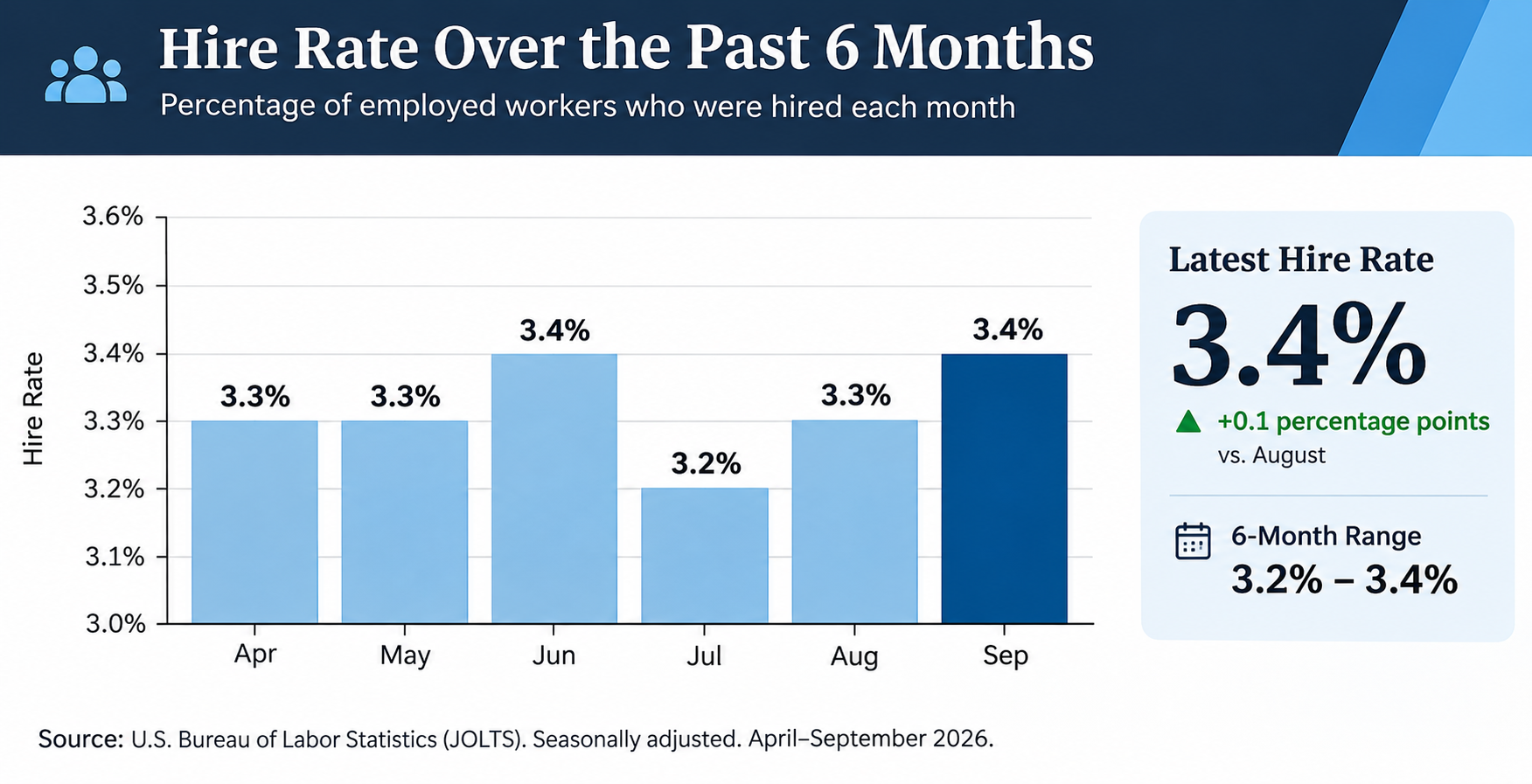
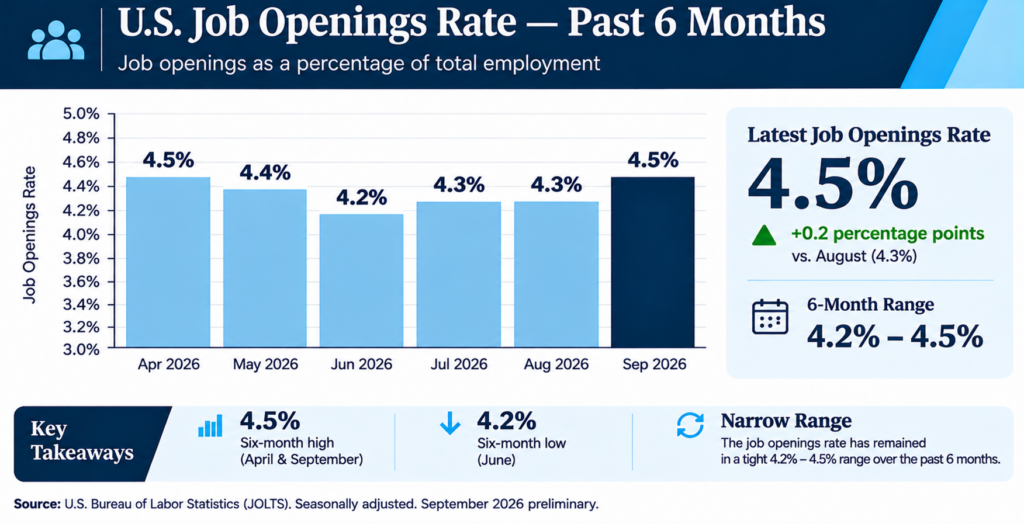
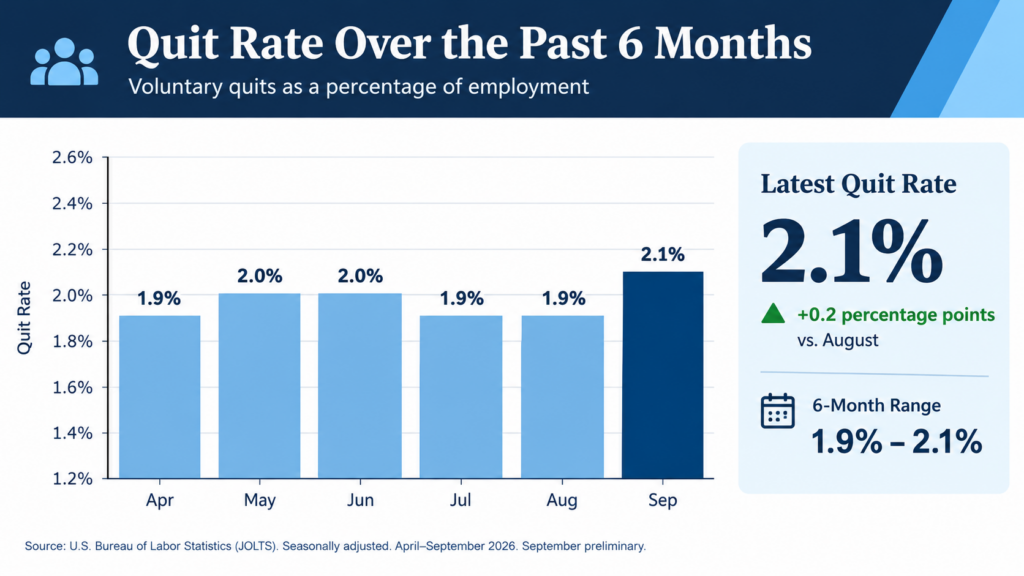
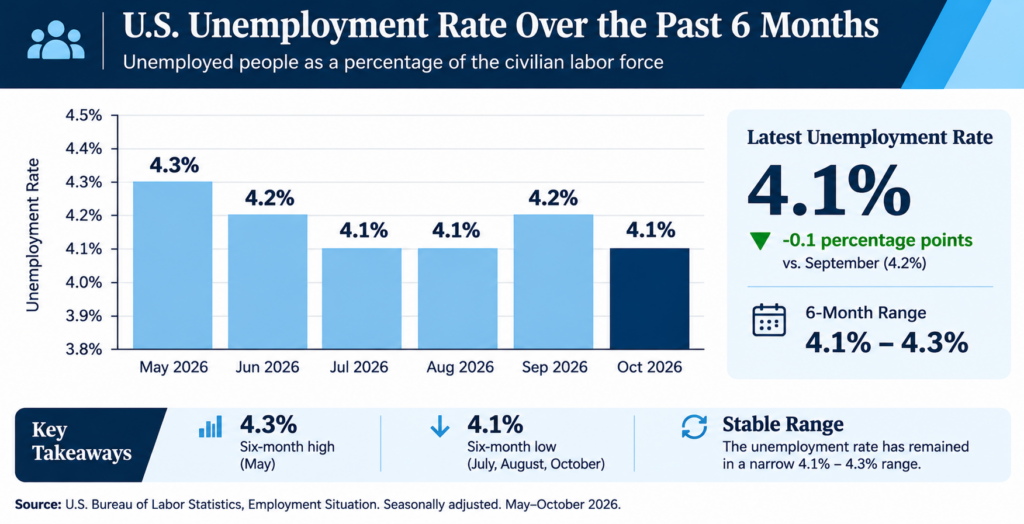
But there’s another side to the story. Each month, I track four key labor market indicators over a rolling six-month period: the hiring rate, quit rate, unemployment rate, and job openings rate. These metrics help me look beyond the monthly headlines and better understand the underlying direction of the labor market. And this month, something encouraging is happening.
Across all four indicators, the latest readings are at the favorable end of their respective six-month ranges. That’s not something we’ve seen consistently in quite some time. A quick word about the quit rate, because it’s one of the more misunderstood labor market indicators. Unlike most situations where people quitting sounds like bad news, a higher quit rate is generally a positive sign for the economy. Why? Because people tend to voluntarily leave their jobs when they’re confident they can find something better. In that sense, the quit rate is one of our clearest measures of worker confidence. When people stop quitting, it often means they’re nervous about what comes next. When they start quitting again, it suggests that confidence – and potentially opportunity – is returning.
Of course, one month doesn’t make a trend, and four improving indicators don’t erase the challenges that remain. But when multiple measures begin moving in a favorable direction at the same time, it’s worth paying attention. The labor market isn’t back. But perhaps, finally, it’s beginning to find its footing.
We’re still in the early chapters of this story, and there’s plenty left to unfold. But after months of disappointing data, mixed signals, and more questions than answers, I’m encouraged by what I’m seeing. The pendulum hasn’t swung back. But for the first time in a while, it looks like it’s starting to move. And for now, I’ll take that.
After all, I’m a Gen Xer. I’ve survived dial-up internet, parachute pants, and trying to record my favorite song off the radio without the DJ talking over the intro. I can handle a little cautious optimism.
By the Numbers:
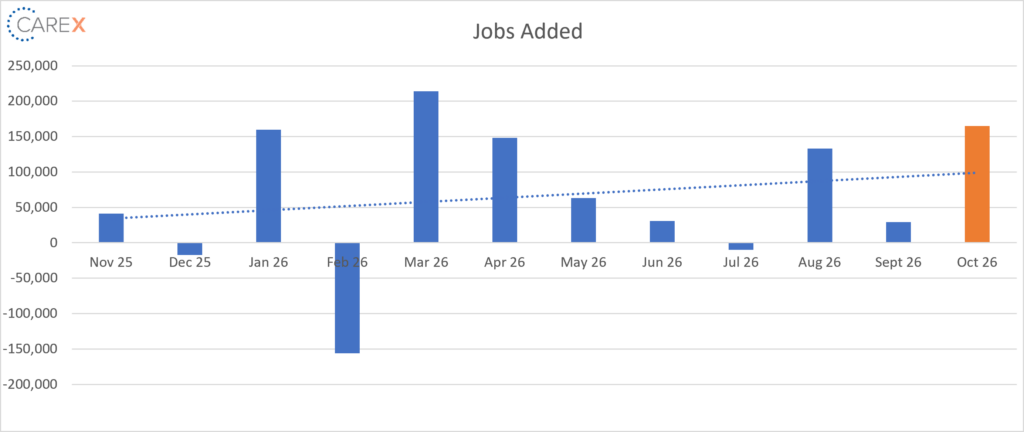
- New Jobs – The U.S. added 165,000 jobs in October
- Professional and business services added 70,000 jobs, far above that sector’s average of 15,000 a month over the past year
- Healthcare continues to carry the job market, adding 42,000 jobs
- Somewhat surprisingly, manufacturing added 19,000 jobs
- Unemployment ticked down to 4.1%, down from 4.2% the previous month
- The unemployment rate continues to hold steady and/or fall largely because people are leaving the labor force
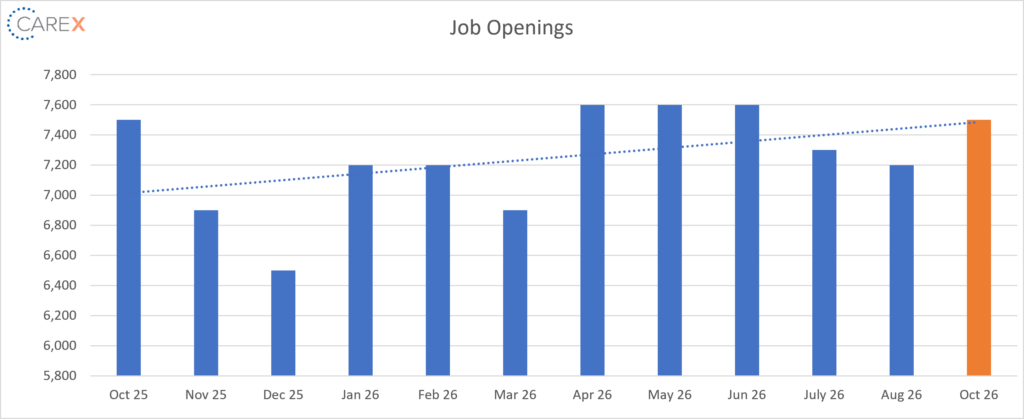
- Job openings increased to 7.5M, up from 7.2M the previous month
- Openings rose in manufacturing (54,000) as well as state and local government (108,000) and professional and business services (106,000)
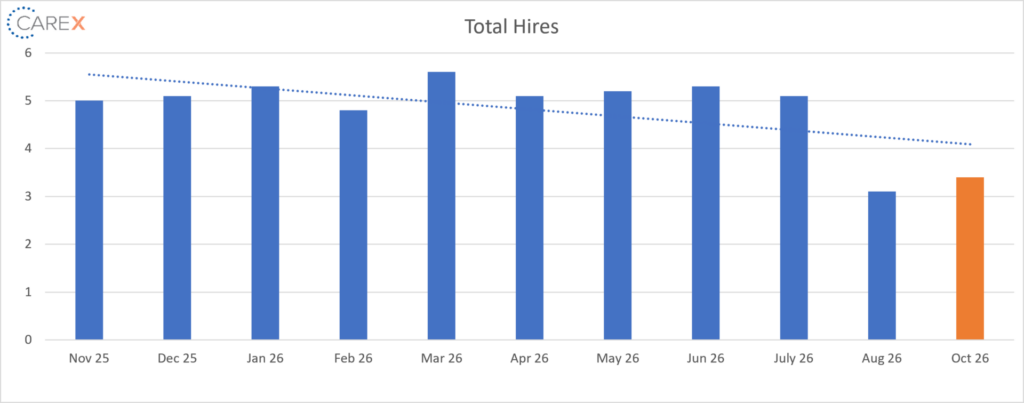
- Hires increased to 5.4M, up from 5.3M previous month
- The hiring rate ticked up to 3.4%
- Layoffs held steady at 1.6M, down from 1.7M two months ago
- Marking a 8-month low
- Quits increased to 3.4M, up from 3.1M the previous month
- Quits, which are seen as a measure of worker confidence in the ability to change jobs and find another one continues to remain very low
- Total separations increased slightly to 5.3M, up from 5.2M the previous month
- Total separations were little changed in all industries
- Jobs per available worker remained unchanged at 1:1
- Up from 0.95 six months ago
To make sure you never miss a Labor Market Insights update, you can subscribe to receive reminders via email! While you’re here, make sure to check out the other resources we have available.