

Now, here’s our labor market insights for September 2026, written by Matt Duffy:
For the first time in a long time, I actually wrote my Labor Market Insights well ahead of deadline. The topic was going to be the Labor Force Participation Rate (my favorite topic!).
Then the jobs report dropped. And here we are.
Given the headlines, noise, and immediate reaction, I scrapped the plan and rewrote the September update. Because if you know me, you probably know how I feel about the initial monthly jobs number – we should probably stop using it to form strong opinions about anything.
It’s not just imperfect. In some ways, it’s borderline dangerous – not because the data is intentionally misleading, but because the first number creates a narrative. That narrative gets blasted across headlines, social media, and cable news. By the time the number gets revised, the original story has already been etched in media stone.
To be fair, we (the consumers) are partly to blame. We demand information immediately and then complain when it isn’t accurate.
It reminds me of the constant dinner conversation with my kids. I can microwave you a crappy dinner that’s ready in two minutes. You’ll complain because it tastes like processed garbage. Or I can make you a proper dinner. It’ll take an hour, but it’ll taste better and probably be a lot healthier. The initial jobs report is the microwave dinner of economic data.
Here’s why.
The Bureau of Labor Statistics gathers payroll employment data through its Current Employment Statistics (CES) survey, covering roughly 120,000 businesses and government agencies. But there’s a catch, the turnaround time for the first report is incredibly tight, so the initial estimate is based on only the responses available by the cutoff. More responses arrive later. Better information becomes available. And the number gets revised.
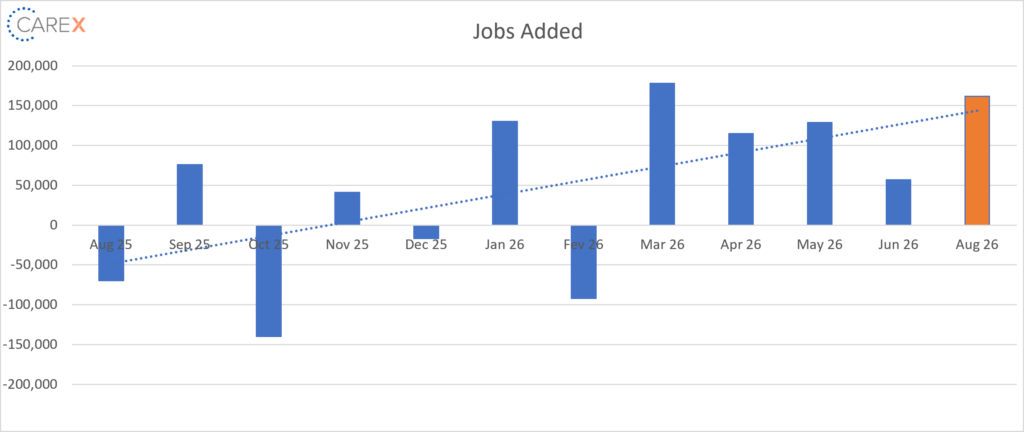
So, when the headline screams that the U.S. “added 162,000 jobs last month,” what you’re really seeing is the first draft of history.
Think of the process this way:
- Initial report: “Hell, I don’t know…here’s our best guess.”
- First revision (month +1): “Okay, we have more information.”
- Second revision (month +2): “Getting warmer…”
- Annual benchmark: “Alright, now we have the receipts.”
And those revisions aren’t always rounding errors. They can be large enough to materially change the story we thought the original report was telling us. For example, May 2026 alone lost 109,000 jobs between its first print and where it stands today. And July 2026 initially reported a loss of 23,000 jobs, to a revised gain of 21,000 (one more revision still to come).
That doesn’t mean the initial jobs report is useless. It means we should treat it for what it is: an early estimate, not economic gospel. Judging the labor market from one initial jobs report is a little like judging a movie from the trailer. You might get the general idea, but you definitely don’t know how it ends.
Watch the trend. Watch the revisions. Look at the other data. And please, don’t lose your mind over one headline.
Okay, I’ll step off my soapbox now. Let’s look at what the rest of the labor market is actually telling us.
By the Numbers:
- New Jobs – The U.S. added 162,000 jobs in August
- Leisure and hospitality (+62k jobs) outpaced all other industries
- Last month, the bulk of the sector’s gains were at restaurants and bars (+59,200)
- Unemployment held steady at 4.1%
- The unemployment rate continues to hold steady and/or fall largely because people are leaving the labor force
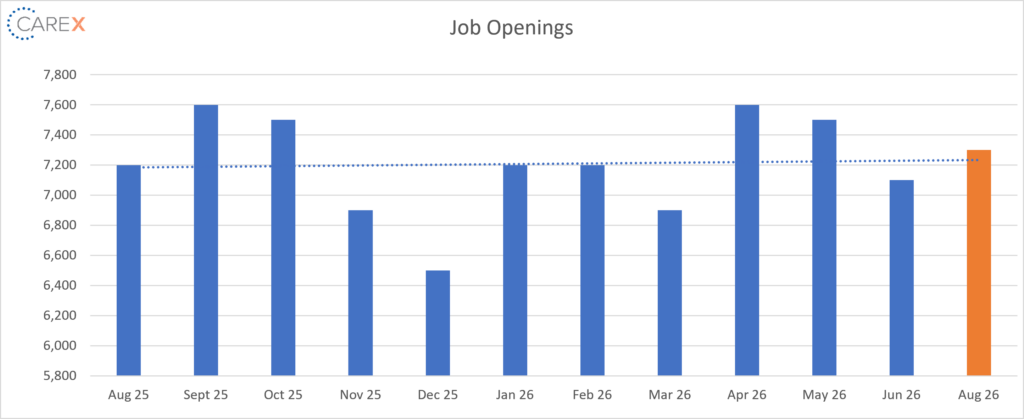
- Job openings increased to 7.3 million, up from a revised 7.1 million last month
- Health care, leisure and hospitality, and professional and business services posted the steepest declines
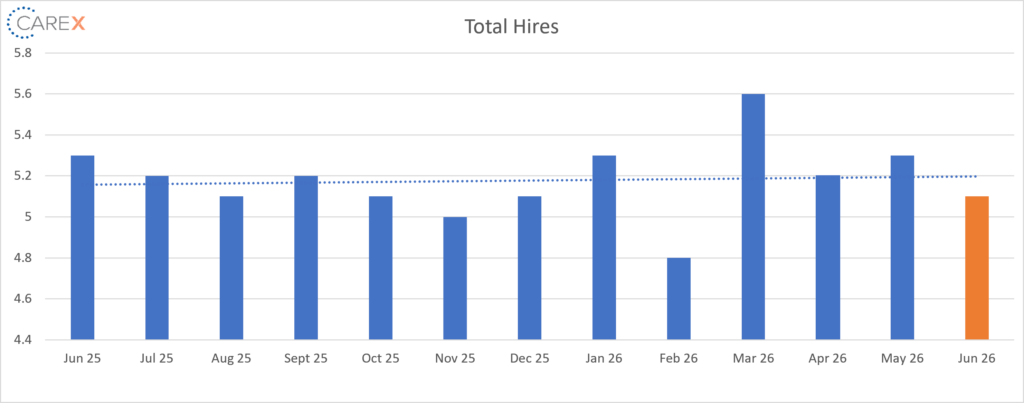
- Hires dropped to 5.1 million, down from 5.3 million the previous month
- Hires declined in professional and business services by 188k
- Layoffs dropped slightly to 1.7 million, down from 1.8 million the previous month
- Marking a 6-month low
- Manufacturing saw its fewest dismissals in over five years
- Quits dropped slightly to 3.1 million, down from 3.2 million the previous month
- Quits, which are seen as a measure of worker confidence in the ability to change jobs and find another one continues to remain very low
- Total separations dropped to 5.1 million, down from 5.4 million the previous month
- Total separations were little changed in all industries
- Jobs per available worker sits at 1:1
- Up from 0.95 four months ago
To make sure you never miss a Labor Market Insights update, you can subscribe to receive reminders via email! While you’re here, make sure to check out the other resources we have available.